
Microbes and Thallophyta: Diversity, Structure, and Economic Importance
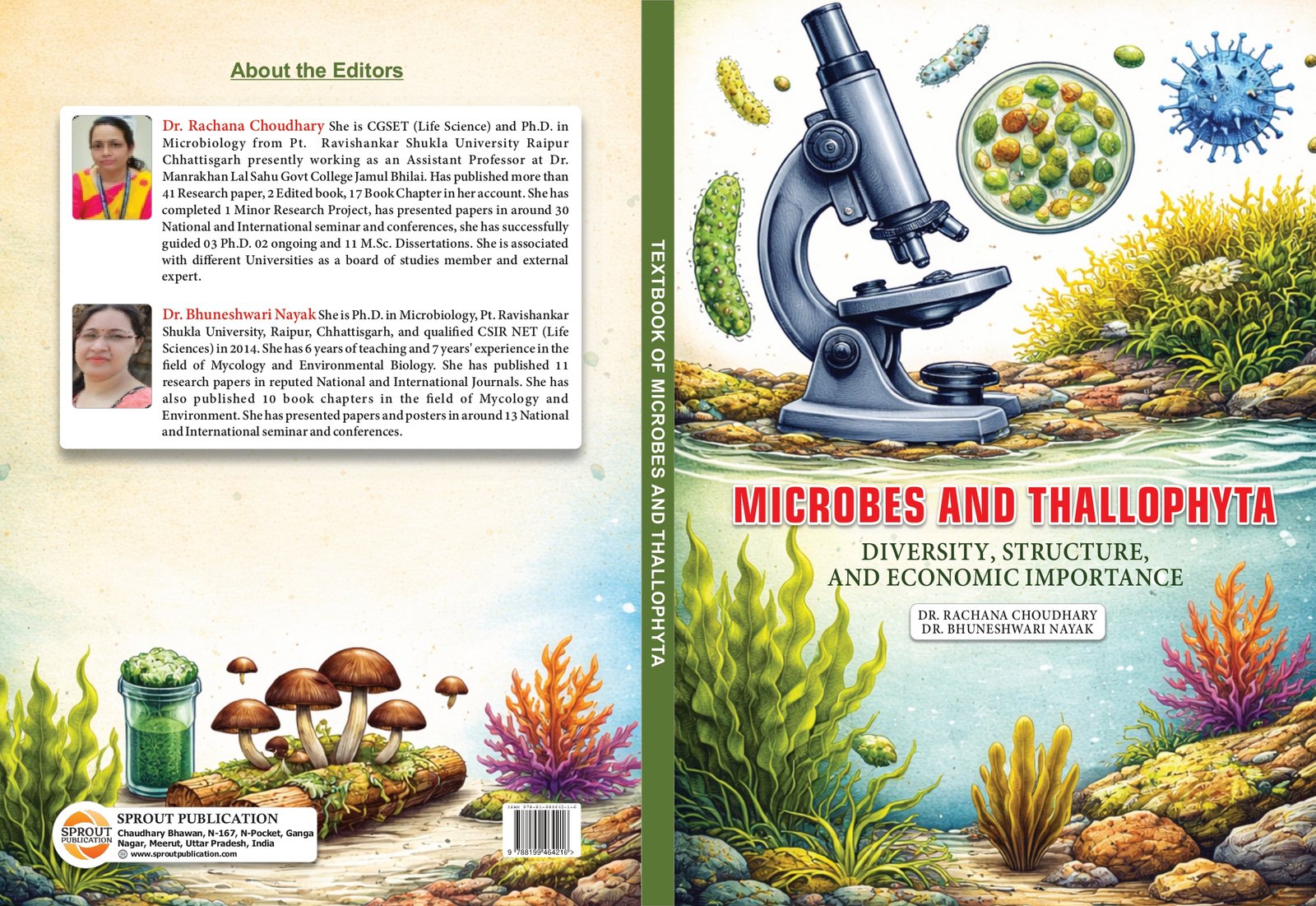
Microbes and Thallophyta: Diversity, Structure, and Economic Importance
Author(s): Dr. Rachana Choudhary, Dr. Bhuneshwari Nayak
ISBN: 978-81-994642-1-6
Binding Type: Perfect Binding
Book Type: Edited Book
SKU: SPBOOKEB09
Product Description
The living world is an intricate network of visible and invisible organisms that sustain the delicate balance of our planet. Among them, microorganisms and thallophytes occupy a unique and foundational position. Although they are often microscopic or structurally simple, their ecological roles, physiological diversity, and economic importance are immense. The book “Microbes and Thallophyta: Diversity, Structure, and Economic Importance” has been written with the primary aim of introducing undergraduate students of Botany and Life Sciences to the fascinating world of these primitive yet vital life forms.
This book integrates the fundamental concepts of microbiology, phycology, mycology, and lichenology, providing a holistic view of the lower organisms traditionally grouped under the Thallophyta. It discusses microorganisms such as viruses, bacteria, and actinomycetes, along with thallophytic groups like algae, fungi, lichens, and mycorrhizae, in a systematic and comprehensive manner. Each unit has been carefully structured to include general characters, classification, morphology, reproduction, life cycles, and economic significance of representative genera.
The content of this book has been developed in accordance with the B.Sc. Life Sciences (Semester II) syllabus, ensuring that it meets academic standards while maintaining clarity and simplicity. Special attention has been given to concepts such as microbial techniques, classification systems, and the biological and industrial importance of lower plants, so that students may easily connect theory with practical applications. Diagrams, examples, and explanatory notes have been included to enhance comprehension and encourage analytical learning.
Microbes and thallophytes, though ancient in origin, continue to influence every aspect of modern science-from agriculture, industry, and biotechnology to ecology and medicine. Their roles in nutrient cycling, soil fertility, fermentation, symbiosis, and environmental conservation make them indispensable to life on Earth. Understanding these organisms not only deepens our appreciation of biodiversity but also equips us with the knowledge needed for sustainable development and environmental stewardship.
It is my earnest hope that this book will serve as a valuable companion for students beginning their journey in botany, and a useful resource for teachers who seek to foster curiosity and critical thinking in the biological sciences.








Reviews
There are no reviews yet.