Positive Psychology and Well-Being
Positive Psychology and Well-Being
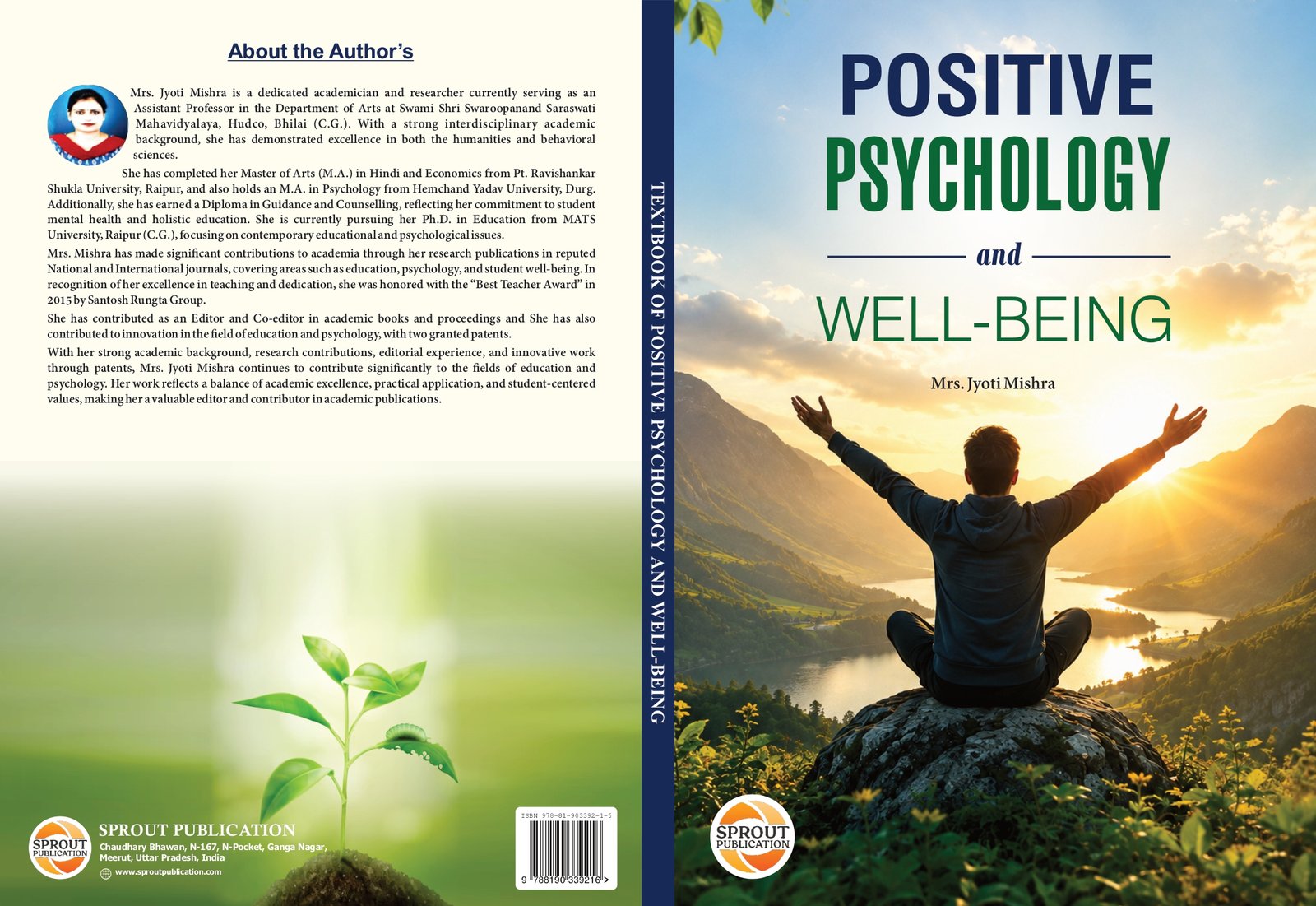
Author(s): Mrs. Jyoti Mishra
ISBN: 978-81-903392-1-6
Binding Type: Perfect Binding
Book Type: Authored Book
Book ID: SPBOOK81
Product Description
In recent decades, the field of psychology has undergone a significant transformation, shifting its focus from merely addressing mental illness and dysfunction to understanding human strengths, virtues, and overall well-being. This emerging perspective, known as Positive Psychology, emphasizes the scientific study of happiness, resilience, and optimal human functioning. The present book, “Positive Psychology and Well-Being,” has been carefully designed to align with contemporary academic requirements and to provide a comprehensive understanding of this dynamic field.
This book is structured into four units, each covering essential dimensions of positive psychology as prescribed in the syllabus. Unit I introduces the foundational concepts of positive psychology, including its meaning, assumptions, and goals, along with its relationship to other disciplines such as health, educational, and social psychology. It also explores the concepts of happiness and well-being through hedonic and eudaimonic traditions, offering both theoretical and measurable perspectives.
Unit II focuses on the concept of happiness and well-being in everyday life. It examines the various factors that influence happiness, including gender, love, marriage, and close interpersonal relationships. Additionally, it provides a developmental perspective by discussing how happiness evolves across different stages of the human lifespan.
Unit III discusses the role of emotions and personality in shaping well-being. It highlights the importance of positive emotions such as hope, optimism, and gratitude, and presents practical approaches for cultivating these emotions. The unit also examines personality traits and the biological foundations of emotions, thereby integrating psychological and physiological perspectives.
Unit IV explores virtues, character strengths, and their role in promoting a meaningful and fulfilling life. Drawing upon Seligman’s classification of virtues, the unit discusses the importance of wisdom and character strengths in maintaining psychological health. It further provides a comparative understanding of virtues across major religious traditions, including Buddhism, Confucianism, Islam, and Hinduism, thereby emphasizing the universal relevance of moral and ethical values in human well-being.
This book is intended for undergraduate and postgraduate students, educators, and researchers in psychology and allied disciplines. Special care has been taken to present the content in a clear, systematic, and student-friendly manner, while maintaining academic rigor. The integration of theoretical concepts with practical insights aims to enhance both conceptual understanding and real-life application.
The editor sincerely hope that this book will serve as a valuable resource in promoting awareness about positive mental health, emotional resilience, and holistic well-being. It is our belief that fostering positive psychological attributes is essential not only for individual growth but also for building a healthier and more harmonious society.








Reviews
There are no reviews yet.